Leica BLK360 G2 review: G1 vs G2 comparison — Part 2
In Part 1 of our Leica BLK360 G2 review, we shared my initial impressions of the scanner. This time, I compare the second-generation BLK360 with the original BLK360 G1 and examine the improvements that matter in real-world laser scanning projects.
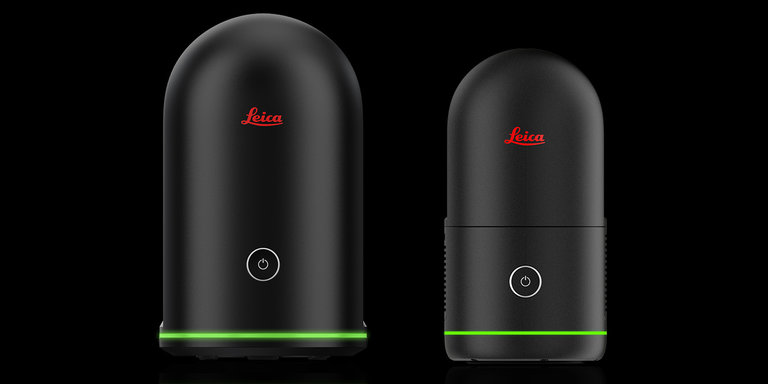
The G2 is smaller, faster, and more accurate than its predecessor. However, not every specification has increased: its stated maximum range is 45 metres, compared with 60 metres for the G1. In practice, maximum range alone does not determine whether captured data will be suitable for detailed building documentation.
Scanning range and point-cloud density
Although the BLK360 G1 had a stated maximum range of 60 metres, our practical working range was normally around 30–35 metres. Points captured at greater distances often had insufficient density for reliable documentation of façades, structural elements, window openings, or roof details.
The BLK360 G2 has a stated maximum range of 45 metres. We have not conducted a dedicated maximum-range test, but our results at 30–35 metres have been consistently good. With comparable scan settings, the G2 produces a noticeably denser point cloud than the first-generation scanner.
Improved 3D point accuracy
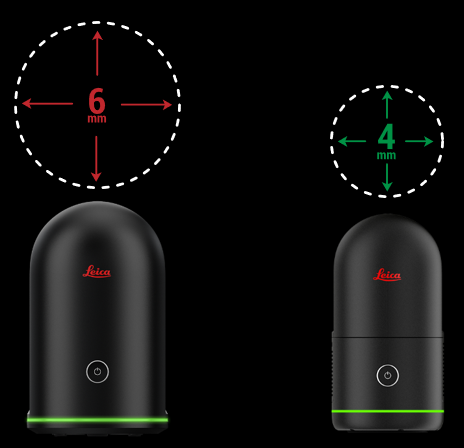
The specified 3D point accuracy has improved from 6 mm at 10 metres on the BLK360 G1 to 4 mm at 10 metres on the G2.
This improvement is particularly useful when documenting architectural details, structural elements, interiors, and other objects where cleaner geometry and more reliable measurements are required.
Faster data capture
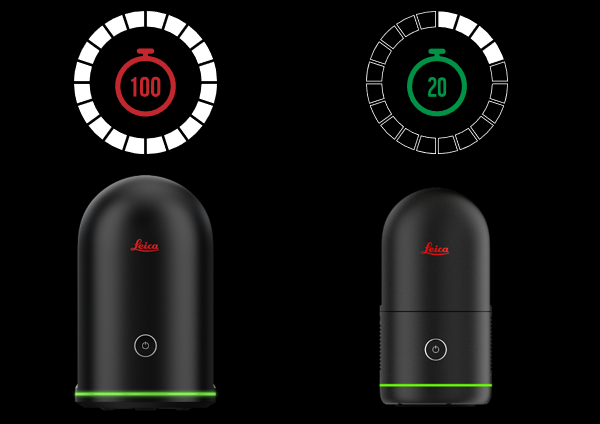
The BLK360 G2 captures up to 680,000 points per second, compared with up to 360,000 points per second on the first-generation model.
The scanner provides four selectable scan settings, allowing the operator to balance acquisition speed and point-cloud density. According to Leica, a complete full-dome scan with spherical imagery can be captured in approximately 20 seconds under the specified settings. See the official Leica BLK360 specifications.
In our experience, the increased acquisition speed makes a significant difference on projects requiring a large number of scan positions.
Cameras and panoramic imagery
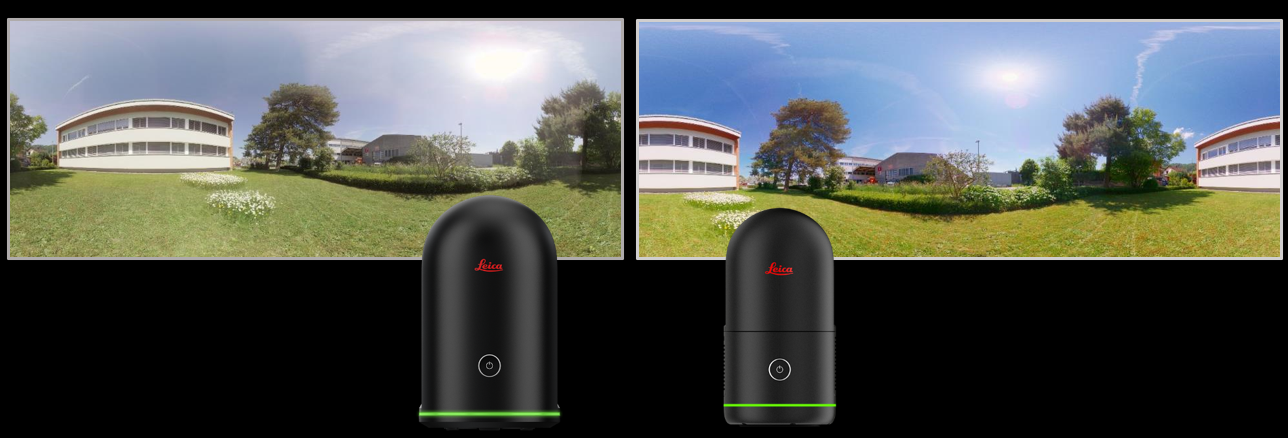
The G2 is equipped with four 13-megapixel cameras, while the G1 uses three 15-megapixel cameras.
Megapixel count alone does not determine final image quality. The updated camera system, five-bracket HDR capture, and improved processing provide better panoramic images and point-cloud colourisation, particularly in spaces with challenging or uneven lighting.
The automatic exposure performs well when scanning darker interiors, although difficult lighting conditions can still require careful positioning and review in the field.
VIS technology
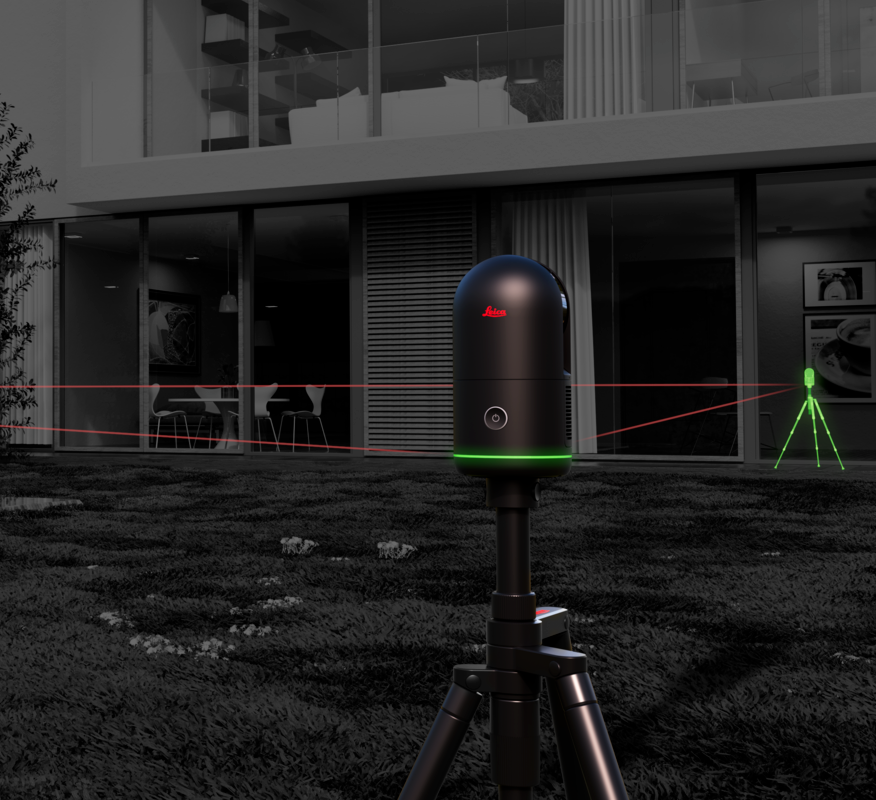
One of the most useful additions to the BLK360 G2 is the Visual Inertial System, or VIS.
VIS tracks the scanner’s movement between scan positions and supports automatic pre-registration in the field. This helps operators understand where each setup belongs, reduces the risk of missing areas, and can simplify the subsequent registration process.
VIS is especially valuable on larger projects with many scanning positions. However, it should be treated as workflow assistance rather than a replacement for checking the final registration.
Battery performance
The G2 uses the larger Leica GEB825 battery. Leica specifies a capacity of up to 70 scan setups per battery, compared with more than 40 setups for the GEB212 battery used by the G1.
Actual battery life depends on the selected scanning and imaging settings, operating conditions, wireless communication, and the use of VIS. For longer site visits, carrying additional charged batteries remains advisable.
Conclusion
Compared with the original BLK360 G1, the Leica BLK360 G2 offers substantial improvements in scanning speed, point density, 3D point accuracy, imaging, portability, and field workflow.
Its stated maximum range is shorter, but for my typical building-surveying work, data quality at practical working distances is more important than the maximum advertised distance.
Overall, the G2 is better suited to fast interior surveys, architectural documentation, Scan-to-BIM projects, and other assignments requiring numerous scan positions and efficient fieldwork.
Read Part 1 of my Leica BLK360 G2 review to learn more about our initial impressions, the scanner’s design, and the equipment included with my kit.
Planning a survey in Montenegro?
Tell us about your property and the files your team needs.
Get a quote